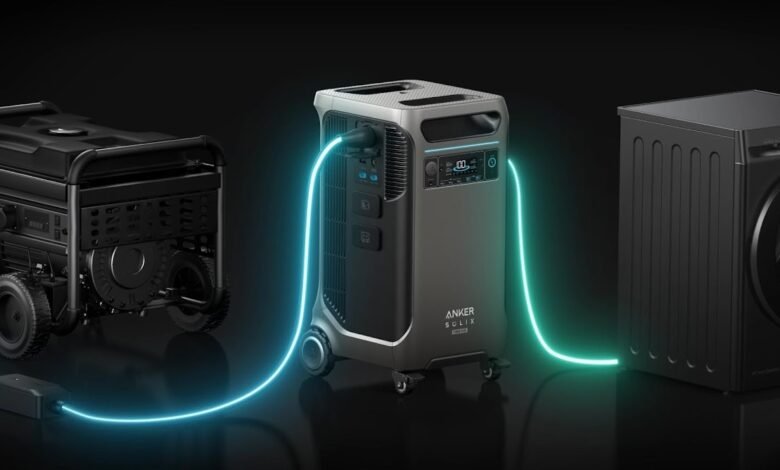
Recharge time plays a central role in how people evaluate modern power stations. The faster a unit restores capacity, the more practical it becomes for travel, home backup, and daily energy management. Multiple variables influence charging duration, ranging from battery chemistry to input wattage and energy management systems. Real performance depends on how all these components interact in real conditions, not just on listed specifications. This makes it important for users to understand what truly shapes recharge speed. Devices like the Anker SOLIX F3800 Plus Portable Power Station illustrate how design, efficiency, and flexible charging inputs work together to shorten downtime without requiring complex setup or heavy configuration.
Key Factors That Shape Core Recharge Speed
Charging Input Determines the Maximum Possible Speed
Recharge time always starts with one foundational element: the amount of power supplied to the system. Higher input wattage allows energy to enter the battery more quickly, reducing the overall time needed to reach full capacity. Solar panels, wall outlets, generators, and home power systems each deliver different power levels, which directly impacts speed. A unit such as the Anker SOLIX F3800 Plus can accept up to 3,200W of high-efficiency solar input, enabling fast recovery when sunlight conditions are favorable. The same model’s compatibility with 240V bypass charging also helps reduce downtime by giving users an alternative high-speed option when the weather is unpredictable.
Battery Capacity Directly Affects Total Charging Time
Larger batteries hold more energy, which means they naturally require more time to refill. Capacity plays a crucial role in setting user expectations for how long recharging will take. A 4kWh station cannot refill at the same pace as a 50kWh system unless input power increases proportionally. Scalable systems highlight this connection well. The F3800 Plus starts at 3.84kWh but can expand to a significantly higher energy reserve for longer outages or full-home use. While added capacity extends backup duration, it also means users must consider the appropriate input method to maintain reasonable recharge windows, especially during continuous home usage or extended off-grid travel.
Conversion and System Efficiency Influence Real-World Results
Not all input power translates directly into usable stored energy. The charging hardware and internal electronics must convert incoming electricity into a form that the battery system can store. Efficient designs minimize energy loss during conversion, which shortens charge time and reduces waste. A well-engineered battery management system controls heat, regulates current flow, and keeps the unit stable. These efficiency gains become especially noticeable when using solar, where conditions fluctuate throughout the day. High-efficiency systems, like those found in the F3800 Plus, help maintain strong performance even when input levels vary or when long-term reliability is essential.
See also: Modern Technology Stack 570058887 Optimization
How Charging Conditions and User Setup Influence Recharge Duration?
Environmental Conditions Shape Solar Recharge Performance
Solar recharging depends on more than panel wattage. Sun angle, cloud cover, temperature, and shading all influence how much power reaches the station. A clear sky can deliver peak input, while partial shade may reduce performance dramatically. Users who rely on solar charging benefit from adjusting panel position, maximizing sun exposure, and choosing panel configurations that stay productive through changing weather. The F3800 Plus supports up to eight 400W panels, giving users flexibility in arranging a setup that captures available sunlight efficiently. This adaptability ensures stronger consistency throughout the day and helps reduce overall charging time.
Input Source Flexibility Helps Maintain Predictable Charging
Recharge speed can vary widely depending on the available power source. When solar output drops during storms or nighttime, an alternative input keeps the recharge timeline predictable. Gas generators and home power panels provide stable, high-wattage input that ensures performance remains consistent even when conditions are unstable. The F3800 Plus can recharge through four different input methods, making the system well-suited for users who switch between renewable and traditional sources. Its ability to work with 240V outlets and generators also provides an important advantage during emergencies, allowing users to recover energy quickly during long outages.
Smart Energy Management Systems Improve Charging Efficiency
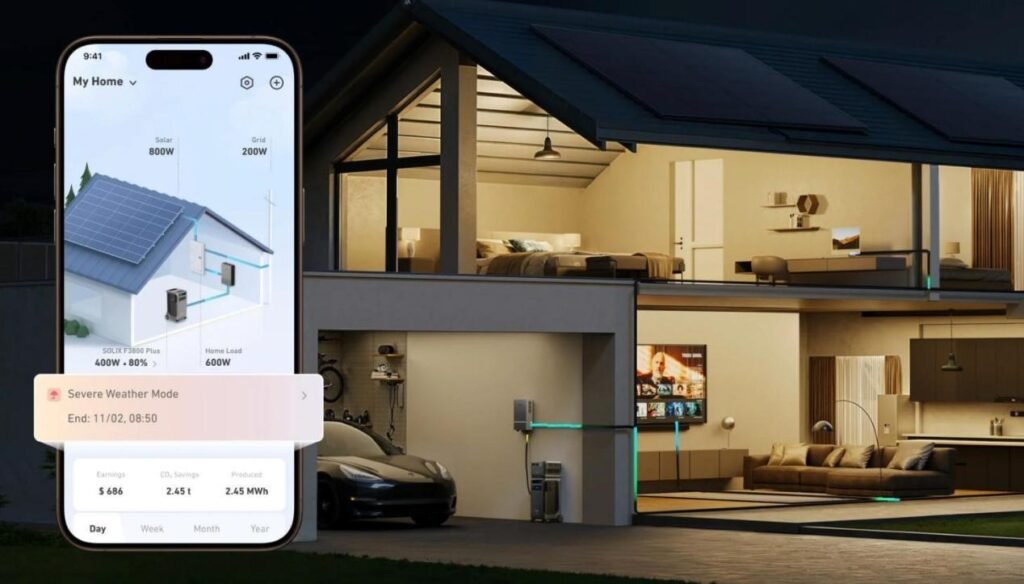
Advanced monitoring features help optimize power flow, reduce energy waste, and maintain healthy battery performance. Smart energy systems automatically adjust charging behavior to suit different conditions, which improves lifespan and enhances speed. Remote control through an app allows users to track progress, manage energy flow, and ensure the device operates efficiently without manual oversight. The F3800 Plus supports automated charging when severe weather is detected, ensuring the system is fully prepared before disruptions occur. This proactive behavior reduces human error and helps ensure the station delivers reliable backup power when it is most needed.
Conclusion
Recharge time for modern power stations depends on several interconnected factors, including input wattage, battery capacity, system efficiency, and real-world charging conditions. High-power inputs reduce downtime, while larger batteries naturally extend the required charging window. Environmental conditions and energy management tools further influence consistency and speed. Systems engineered with adaptable inputs and optimized conversion hardware provide more predictable and responsive performance in daily use. Devices such as the Anker SOLIX F3800 Plus portable power stations show how multi-source input options, smart management, and efficient solar integration help users maintain fast, reliable charging across different situations. Understanding these elements equips users to get the most out of their power system and plan energy use with confidence.